Pensacola dates its founding to 1559. Its 39 National Register listings, four historic districts, museums and St. Michael's Cemetery, with hours.
Last checked Oct. 10, 2026. Facts come from the City of Pensacola’s Historic Preservation page, the National Park Service’s National Register of Historic Places listed properties file (May 22, 2026) and each museum’s own site. Hours are as each place publishes them; after Hurricane Isaias, call before you go.
Pensacola counts its history from 1559, when Don Tristan de Luna and Spanish settlers established it, according to the city’s Historic Preservation page, which calls Pensacola “the first multiyear European settlement in the United States.” The University of West Florida Historic Trust, which runs the city’s main history museum, tells the story under the name “City of Five Flags” for the five flags Pensacola has lived under.
Who to call
- Historic Pensacola (UWF Historic Trust museums): 850-595-5985, 330 S. Jefferson St.
- Pensacola Lighthouse and Maritime Museum: 850-393-1561
- National Naval Aviation Museum: 850-452-8450
- Historic districts and building changes: City Planning and Zoning Division, 850-435-1670
The historic districts
Pensacola passed its first preservation ordinance and drew its first district boundaries in 1968, after the National Historic Preservation Act of 1966, and its Architectural Review Board reviews changes in the districts, the city says. From the city’s page:
- Pensacola Historic District: bounded by Chase Street, Ninth Avenue, Palafox Street and Pensacola Bay. Designated locally in 1968 and listed in the National Register in 1970. Its period of significance starts with the Spanish occupation of downtown in 1754; most buildings are 19th and 20th century, including French Creole cottages, Victorian and Greek Revival houses. The district covers 36 blocks.
- Palafox Historic Business District: eight blocks of downtown’s commercial core, roughly between Wright and Main streets. Listed in the National Register in 2016; its period of significance runs from 1880 to 1965.
- North Hill Preservation District: bounded by Blount, DeVilliers, Wright and Palafox streets. City boundaries drawn in 1973-74; listed in the National Register in 1983. Styles include Queen Anne, Classical Revival, Tudor Revival, Spanish Colonial Revival and Bungalow.
- Old East Hill Preservation District: bounded by Gadsden Street, Ninth Avenue, Wright Street and Hayne Street. Its preservation zoning was drafted by the East Hill Preservation Association in 1984; its period of significance is 1870 to the 1920s.
Museums and places to visit
Pensacola Museum of History, 330 S. Jefferson St. The flagship museum of the UWF Historic Trust is in the former Pensacola City Hall, a three-story Mediterranean Revival building from 1907. Its permanent exhibit, “The City of Five Flags,” was renovated in 2012. Published hours are 10 a.m. to 4 p.m. Tuesday through Saturday and noon to 4 p.m. Sunday; closed Monday. One ticket also covers Historic Pensacola Village, the Pensacola Children’s Museum and the Pensacola Museum of Art. The Historic Pensacola website was not loading on Oct. 10; call 850-595-5985.
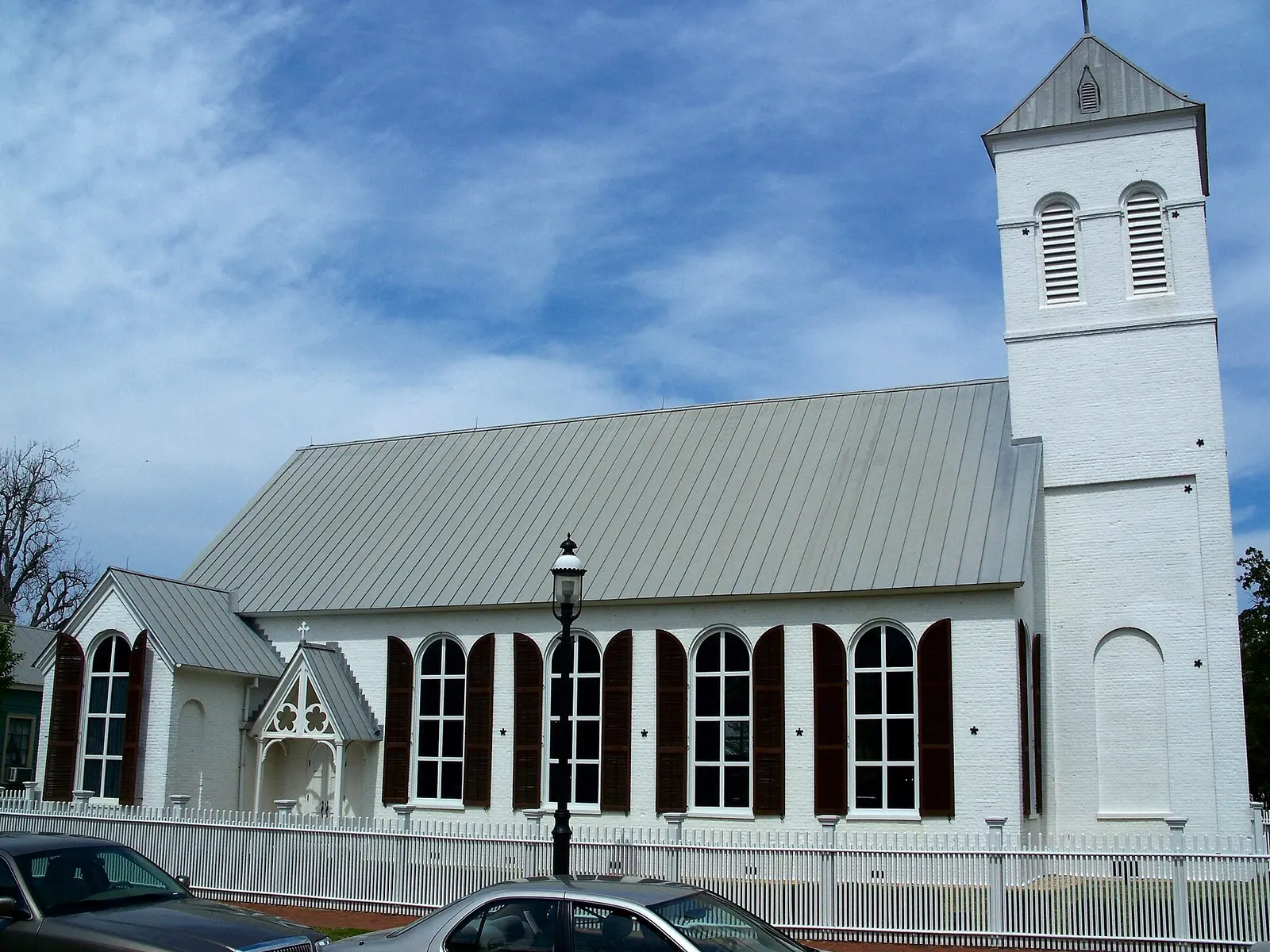
Historic Pensacola Village, around the museum: the Trust’s properties include Old Christ Church, the Lavalle House, the Dorr House, the Lear/Rocheblave House, the Tivoli High House, the Barkley House, the Museum of Commerce and the Museum of Industry, plus a Colonial Archaeological Trail. Old Christ Church (1974), the Lavalle House (1971) and the Clara Barkley Dorr House (1974) are each listed in the National Register.
Pensacola Lighthouse and Maritime Museum, on Naval Air Station Pensacola. Open daily 9 a.m. to 4 p.m., with last admission at 3:40 p.m.; visitors can climb 177 steps, its website says. The lighthouse and keeper’s quarters were listed in the National Register in 1974.
National Naval Aviation Museum, 1750 Radford Blvd. on Naval Air Station Pensacola. Free admission, open 9 a.m. to 4 p.m. daily, according to its website.
Getting on base: civilian access to the air station for both museums is daily from 9 a.m. to 3 p.m. through the West Gate, at the south end of Blue Angel Parkway, and every visitor needs a valid REAL ID or U.S. passport, the lighthouse says.
Cemeteries
St. Michael’s Cemetery, 6 N. Alcaniz St. An eight-acre green space downtown that was “probably in use by the mid to late 18th century,” with people of all faiths buried there, according to the St. Michael’s Cemetery Foundation. It was dedicated as a state park in 1949. Open daily, 9 a.m. to 5 p.m.
Barrancas National Cemetery, 80 Hovey Road on Naval Air Station Pensacola, was listed in the National Register in 1998.
Magnolia and AME Zion cemeteries, 1200 block of North A Street. Established at the turn of the 20th century, they reflect Pensacola’s African American community from the early 1900s through the 1980s, according to the city’s Pensacola Area Cemetery Team page. The city, the University of West Florida, nonprofits and residents have held cleanups there; for information, the city lists the UWF Archaeology Institute, 850-474-3015.
Every National Register listing
From the National Park Service’s file of listings through May 22, 2026, with the year each was listed. “NHL” marks a National Historic Landmark.
| Listed | Property | Address |
|---|---|---|
| 1966 | Fort Barrancas Historical District (NHL) | Naval Air Station |
| 1966 | Plaza Ferdinand VII (NHL) | Palafox Street between Government and Zaragossa streets |
| 1970 | Pensacola Historic District | Downtown |
| 1971 | Lavalle House | 203 E. Church St. |
| 1972 | L&N Marine Terminal Building | Commendencia Street Wharf |
| 1974 | Old Christ Church | 405 S. Adams St. |
| 1974 | St. Michael’s Creole Benevolent Association Hall | 416 E. Government St. |
| 1974 | Fort George Site | La Rua and Palafox streets |
| 1974 | Pensacola Lighthouse and Keeper’s Quarters | Naval Air Station |
| 1974 | Clara Barkley Dorr House | 311 S. Adams St. |
| 1976 | Saenger Theatre | 118 S. Palafox St. |
| 1976 | Pensacola Naval Air Station Historic District (NHL) | Naval Air Station |
| 1977 | Charles William Jones House | 302 N. Barcelona St. |
| 1978 | American National Bank Building | 226 S. Palafox St. |
| 1979 | Louisville and Nashville Passenger Station and Express Building | 239 N. Alcaniz St. |
| 1979 | St. Joseph’s Church Buildings | 140 W. Government St. |
| 1979 | Thiesen Building | 40 S. Palafox St. |
| 1982 | Pensacola Hospital | North 12th Avenue |
| 1983 | North Hill Preservation District | North Hill |
| 1983 | Crystal Ice Company Building | 2024 N. Davis St. |
| 1983 | John Edmunds Apartment House | 2007 E. Gadsden St. |
| 1991 | King-Hooton House | 512-514 N. Seventh Ave. |
| 1994 | First Christian Church | 619 E. Gadsden St. |
| 1996 | Emanuel Point Shipwreck Site | Address restricted |
| 1997 | US Customs House and Post Office | 223 Palafox Place |
| 1998 | Barrancas National Cemetery | 80 Hovey Road |
| 2000 | Hickory Ridge Cemetery Archeological Site | Address restricted |
| 2000 | James House | 1606 N. Martin Luther King Jr. Blvd. |
| 2001 | USS Massachusetts (BB-2) shipwreck | 1 mile south-southwest of Pensacola Pass |
| 2008 | Sacred Heart Catholic Church | 716 N. Ninth Ave. |
| 2012 | Hver-Knowles Planing Mill Chimney | Scenic Bluffs Highway and Langley Avenue |
| 2013 | Mount Zion Missionary Baptist Church | 528 W. Jackson St. |
| 2014 | United States Post Office and Court House | 100 N. Palafox St. |
| 2016 | Palafox Historic District | Palafox Street, Main to Chase |
| 2016 | Marzoni House | 714 La Rua St. |
| 2017 | Pensacola Harbor Defense Project | West end of Santa Rosa Island |
| 2018 | P.K. Yonge House | 1924 E. Jackson St. |
| 2020 | Boy Scout Building | 1601 E. La Rua St. |
| 2022 | Motor Inn Number 2 | 500 W. Jackson St. |
Nearby, the file lists Fort Pickens (1972) west of Pensacola Beach and the Perdido Key Historic District (1980). The two archaeological sites marked “address restricted” are not open to the public.
Related: Pensacola population and growth, parks and trails and things to do this month.
Frequently asked questions
When was Pensacola founded?
The City of Pensacola dates its founding to 1559, when Don Tristan de Luna and Spanish settlers established it. The city calls it the first multiyear European settlement in the United States.
How many National Register of Historic Places listings are in Pensacola?
The National Park Service’s May 2026 list has 39 listings with a Pensacola address, from Plaza Ferdinand VII and the Fort Barrancas Historical District (1966) to Motor Inn Number 2 (2022). Several are on Naval Air Station Pensacola.
What are Pensacola’s historic districts?
The Pensacola Historic District, the Palafox Historic Business District, North Hill and Old East Hill, according to the city’s Historic Preservation page.
What is the oldest cemetery in Pensacola?
St. Michael’s Cemetery, an eight-acre cemetery downtown at 6 N. Alcaniz St., was probably in use by the mid to late 18th century, its foundation says. It is open daily from 9 a.m. to 5 p.m.
Can civilians visit the Pensacola Lighthouse and the Naval Aviation Museum?
Yes. Civilian access to Naval Air Station Pensacola for both is daily from 9 a.m. to 3 p.m. through the West Gate at the south end of Blue Angel Parkway, with a valid REAL ID or U.S. passport, the lighthouse says.
Have your say